
Is Morocco Safe? A Cultural Travel Guide for Americans
Morocco is a welcoming and culturally rich destination for American travelers. Learn what to know about safety, local customs, transportation, and planning a meaningful journey through Morocco’s cities, landscapes, and communities.
In This Guide
Quick Answer
Why This Matters
Is Morocco Safe?
Who You Travel With
Planning Your Trip
For Organizations and Institutions
FAQs
Related Guides
Quick Answer
Yes. Morocco sits at Level 2, "Exercise Increased Caution," on the U.S. State Department's four-level advisory scale - the same level currently assigned to Italy, France and Germany. Violent crime against foreign visitors is rare. The problems travelers actually encounter are petty theft in crowded medinas, persistent street selling, and unofficial guides who attach themselves to visitors who look lost.
All three are situational, and all three largely disappear when you are not navigating alone.
Project Por Amor runs Morocco in groups capped at 24 travelers, with private transport, licensed Moroccan guides, and three tour managers on the ground. Our travelers move through Fez and Marrakesh with people who grew up there.
Advisory levels change. Check the current State Department advisory for Morocco before you book, and again before you fly.
Why This Matters
"Is it safe?" is rarely only a question about crime.
Underneath it is usually a different question: will I be out of my depth? Morocco is a Muslim country where three languages are in daily use - Darija, Amazigh and French - and where the medinas of Fez and Marrakesh are medieval street plans that were never designed to be legible to outsiders. Fez el Bali has thousands of lanes and no useful grid. That is disorienting, and disorientation feels like danger.
Most of what makes Morocco feel unsafe to first-time visitors is the experience of being alone in a place where you cannot read the cues. The souk vendor calling after you, the man who offers directions and then asks for money, the taxi with no meter - none of these are threats. They are the friction of arriving somewhere without context.
The traveler who has that context has a completely different trip. She is buying from a cooperative she was introduced to. She knows what things cost. She understands why the tanneries smell the way they do and what the dye pits are for. She is not being managed around the country; she is being let into it.
That is the difference this guide is really about.
Is Morocco Safe?
1. What the U.S. Advisory Actually Says
The State Department places Morocco at Level 2 of four: "Exercise Increased Caution." Level 1 is "Exercise Normal Precautions." Level 3 is "Reconsider Travel" and Level 4 is "Do Not Travel."
Level 2 is the most common rating in the world - roughly 110 countries carry it - and is currently shared by Italy, France and Germany. It reflects a general terrorism risk assessment, not a specific or elevated threat to visitors. Morocco has no internal travel restrictions for U.S. citizens and no regional "do not travel" zones on our itinerary.
Read the advisory yourself before you book. It is short, it is free, and it is more useful than any tour operator's reassurance - including ours.
2. Where Travelers Actually Run Into Trouble
In our experience and in consular reporting, incidents cluster in three places:
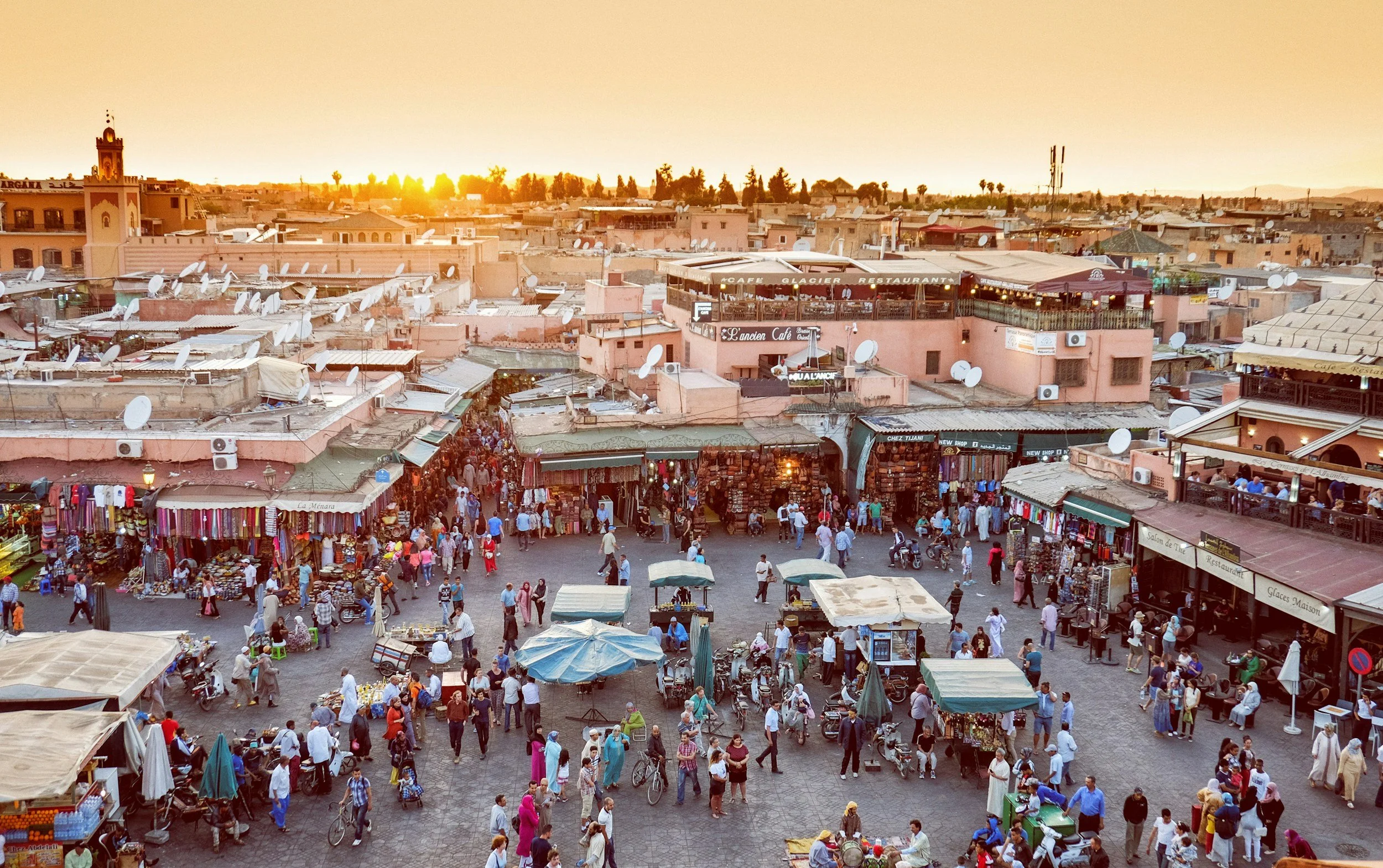
- Crowded medinas and markets, where pickpocketing and bag-snatching occur, particularly around Jemaa el-Fnaa in Marrakesh and the gates of Fez el Bali.
- Unofficial guides, who approach visitors near medina entrances, offer to show the way, and then demand payment or steer travelers to shops that pay commission. Licensed Moroccan guides carry official credentials.
- Transactions without a settled price, including unmetered taxis and market purchases. Agreeing the price first resolves nearly all of it.
Note what is not on that list. Violent crime against tourists is uncommon, and Morocco has been a stable constitutional monarchy receiving millions of international visitors a year for decades.
3. Women Traveling in Morocco
Women travelers, including solo women, visit Morocco in large numbers every year. The most common complaint is street harassment - comments, following, persistent attention - rather than physical danger. It is more frequent in tourist-heavy areas of Marrakesh than in Fez, Rabat or the smaller towns.
Practical measures help: dressing to cover shoulders and knees, walking with purpose, declining firmly and continuing on, and avoiding empty medina lanes after dark. Traveling in a group removes most of it entirely.
It is worth saying plainly that this is a real annoyance and not something to talk anyone out of having noticed.
4. Health, Food and Water
Drink bottled or filtered water. Eat at busy places where food moves quickly. Fresh produce washed in tap water is the most common source of traveler's stomach upset, not the street food itself.
Morocco has good private hospitals in Casablanca, Rabat, Marrakesh and Fez. Care in rural areas and in the desert is limited, which is why travel insurance covering medical evacuation matters on any itinerary that includes the Sahara.
5. What Changes When You Travel with Moroccan Guides
Almost everything on the list above is a navigation problem, and navigation problems are solved by people who know the ground.
A licensed Moroccan guide is not a safety escort. She is the reason the trip is worth taking: she has the relationships that get you into a working atelier rather than a showroom, she knows which cooperative actually pays its women members, and she can tell you what a building meant before it meant what it means now.
Safety is a byproduct of that, not the point of it.
6. Common Misconceptions About Morocco
Morocco is dangerous for Americans.
Morocco has one of the longest continuous diplomatic relationships the United States has with any country, dating to 1777. Americans travel there in large numbers without incident. The advisory level is the same as Italy's.
You have to bargain aggressively or you will be cheated.
Bargaining is a normal part of souk commerce, but it is a conversation, not a contest. In cooperatives and fixed-price artisan workshops there is nothing to bargain over, and haggling over a few dirhams with a craftsperson is worth reconsidering.
Women have to cover their hair.
Non-Muslim women are not expected to cover their hair in Morocco - not in the street, not in the souks, and not at the Hassan II Mosque in Casablanca, the main mosque open to non-Muslim visitors. Covering shoulders and knees is the practical norm, and it is about respect rather than requirement.
The desert is the dangerous part.
The Sahara portion of a well-run itinerary is among the most controlled parts of the trip - known routes, established camps, satellite communication. The genuine consideration in the desert is distance from medical care, which is an insurance question.
Morocco is one experience.
Rabat is a coastal administrative capital. Fez is a medieval university city. Marrakesh is a trading crossroads. The Rif mountains, the Atlas and the Sahara are three different worlds with different languages in daily use. Treating Morocco as a single destination is the most common mistake in planning a trip there.
Project Por Amor Perspective
Travelers ask us whether Morocco is safe. The more useful question is who you will be with when you get there. A group of twenty-four moving through Fez with a Moroccan guide who was born in the Rif has a fundamentally different experience from two people with a guidebook - not a safer version of the same trip, a different trip.
Who You Travel With
Fatima Habte has guided in Morocco for more than seventeen years.
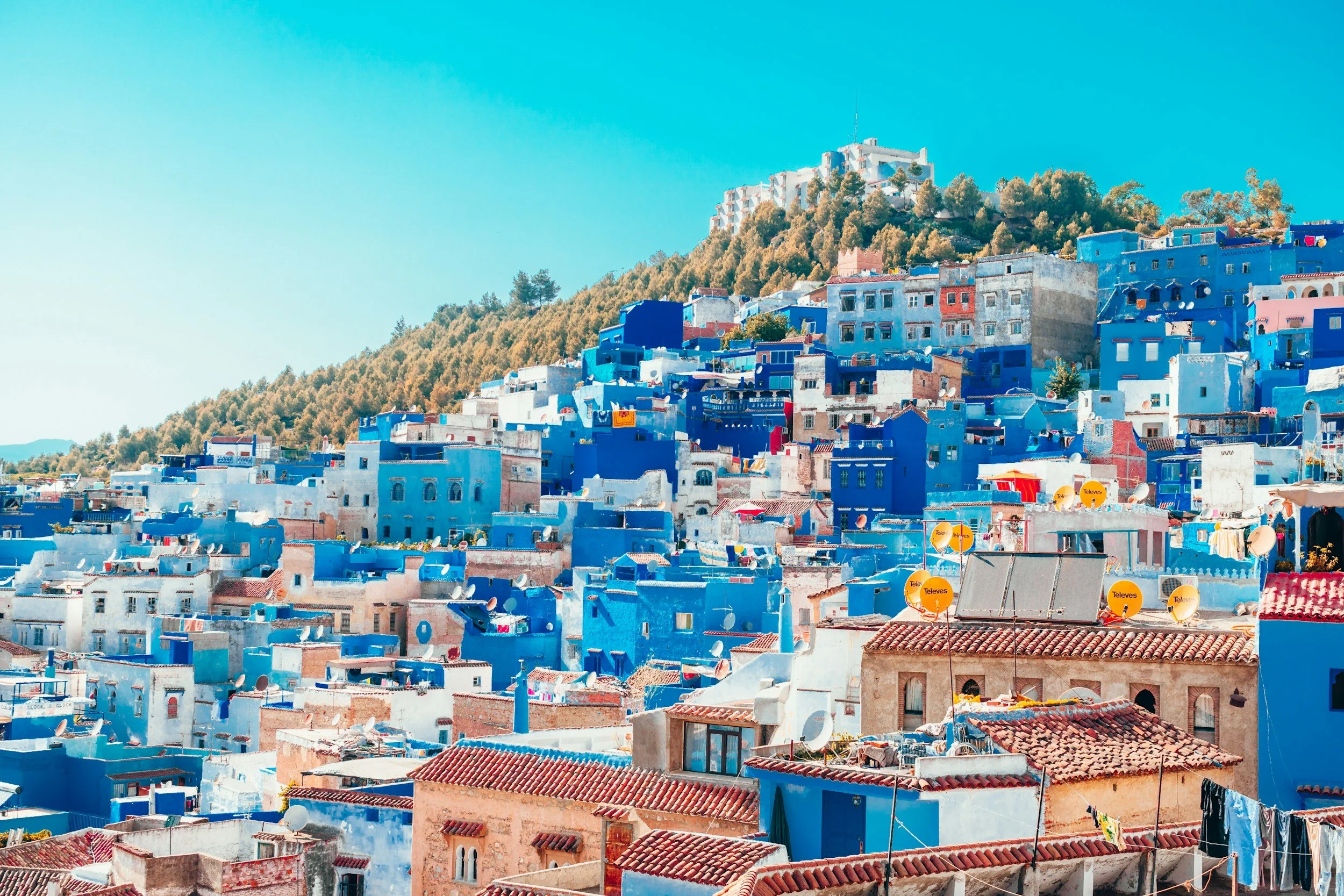
She was born and raised in Chefchaouen, the blue city in the Rif mountains. She holds two master's degrees, and her academic background spans English Literature and Linguistics, Responsible Tourism and Human Development, and Moroccan Jewish Heritage - a combination that lets her guide with real historical depth rather than a memorized script.
Her work is rooted in women's lived experiences, rural communities, and the cultural layers most tourism never reaches. She is the founder of a community-based ecolodge in Talassemtane National Park.
Traveling with Fatima is not about what you see. It's about what you understand.
Project Por Amor's Morocco program is built with Fatima and led on the ground by a professional Moroccan guide alongside two U.S. tour managers. Groups are capped at 24 travelers, minimum age 15."
Planning Your Trip
1. When to Visit Morocco
Spring and fall are the reliable windows. Project Por Amor runs Morocco in winter - our January 2027 departure ran January 11-22 - because the desert and the southern oases are at their best when the interior is cool, and the imperial cities are clear of summer crowds. Days are mild, desert nights are genuinely cold, and you will want layers.
Summer is the season to avoid. Marrakesh and the interior sit close to 100F/38C through July and August, with heat waves well past that, which makes long medina days punishing.
Ramadan shifts each year on the lunar calendar and changes the rhythm of daily life. Traveling during Ramadan can be extraordinary, but restaurant hours and site access change and it should be a deliberate choice rather than an accident of scheduling.
2. What to Wear
Shoulders and knees covered for both men and women, in cities and at religious sites. Beyond that, Morocco is less strict than most visitors expect. Bring real walking shoes - medina streets are uneven stone and you will cover distance. Layers for the desert, where the temperature swing between afternoon and night is severe.
3. Money and Payments
The Moroccan dirham is a closed currency, so you exchange on arrival rather than before you leave. Cards work in hotels and larger restaurants; cooperatives, taxis, markets and rural vendors are cash. Withdraw dirhams from bank ATMs and carry small notes - vendors frequently cannot break large ones.
4. Getting Around
Morocco's rail network between Casablanca, Rabat, Fez and Marrakesh is good. Beyond the rail corridor, distances are long and mountain roads are slow. Our itineraries move by private coach, which is the difference between arriving at the Todra Gorge with the day ahead of you and arriving exhausted.
5. Language
Darija is the everyday Moroccan Arabic; Amazigh languages are widely spoken, particularly in the mountains and the south; French is the language of business and administration. English is common in tourism but not outside it. A few words of Darija - shukran, la shukran, bslama - changes how you are received more than its literal usefulness suggests.
6. Health and Preparation
No vaccinations are required for entry from the U.S., though routine immunizations should be current; check with a travel clinic six weeks out. Bring any prescription medication in original packaging with a copy of the prescription. Travel insurance including medical evacuation is strongly recommended for any itinerary with a desert segment.
U.S. passports must be valid for at least six months beyond your entry date. Americans do not need a visa for stays under 90 days.
For Organizations and Institutions
Most of what Project Por Amor produces is built for an institution rather than sold to individuals. Museums, arts nonprofits, preservation organizations and alumni associations come to us with a membership and a mission, and we build the program around both.
For Morocco that has meant itineraries weighted toward craft traditions, women's cooperatives and religious heritage - a country where a mosque, a synagogue and a church sit within reach of each other in a single afternoon is unusually rich ground for an organization whose members care about cultural history.
A members' trip can also work as a fundraiser. We produce the program; your organization sets its own price to members and keeps the margin.
If you are an executive director considering a Morocco departure for your membership, the practical questions are group size, season and lead time. We plan institutional departures twelve to eighteen months ahead.
FAQs
-
Yes, with ordinary precautions. Morocco is at Level 2, "Exercise Increased Caution," on the U.S. State Department's four-level scale - the same level as Italy, France and Germany. Violent crime against visitors is rare; petty theft in crowded medinas is the realistic concern. Check the current advisory before you book.
-
Women travel throughout Morocco every year, including solo. The common issue is street harassment rather than physical danger, and it is more frequent in tourist areas of Marrakesh than elsewhere. Dressing to cover shoulders and knees, declining firmly, and traveling in a group substantially reduce it.
-
No. U.S. citizens can enter Morocco without a visa for stays up to 90 days. Your passport must be valid for at least six months beyond your date of entry and have at least one blank page.
-
Spring and fall are the most reliable. Winter is excellent for the desert and the southern oases, which is why Project Por Amor runs Morocco in January and February. Avoid July and August, when Marrakesh and the interior sit close to 100F/38C.
-
In hotels and larger restaurants, yes. Cooperatives, taxis, markets and rural vendors are cash. The dirham is a closed currency, so exchange on arrival and carry small notes.
-
Our Morocco program is capped at 24 travelers with a minimum of 15, and travels with two U.S. tour managers and a professional Moroccan guide. Minimum age is 15.
Related Guides
-
Best Time to Visit Sicily: A Seasonal Travel Guide
-
Cuba Arts & Music: A Cultural Travel Guide
-
Baja Beyond the Beach: An Art, Wine & Culture Guide