
In March, we wrote about the crisis unfolding in Cuba. Today the humanitarian catastrophe is devastating, destroying daily life for Cubans. While the world's attention is on Iran, Gaza, and Ukraine, nine million of our neighbors ninety miles are living through the most severe humanitarian emergency in the island's modern history — and almost none of it has made the front pages here at home.
For twenty years, Cuba has been at the heart of our mission. Many of you better understand the island and its people because you went there with us in person. This is your next update — a tragic one, but as honest and complete as we can make it.
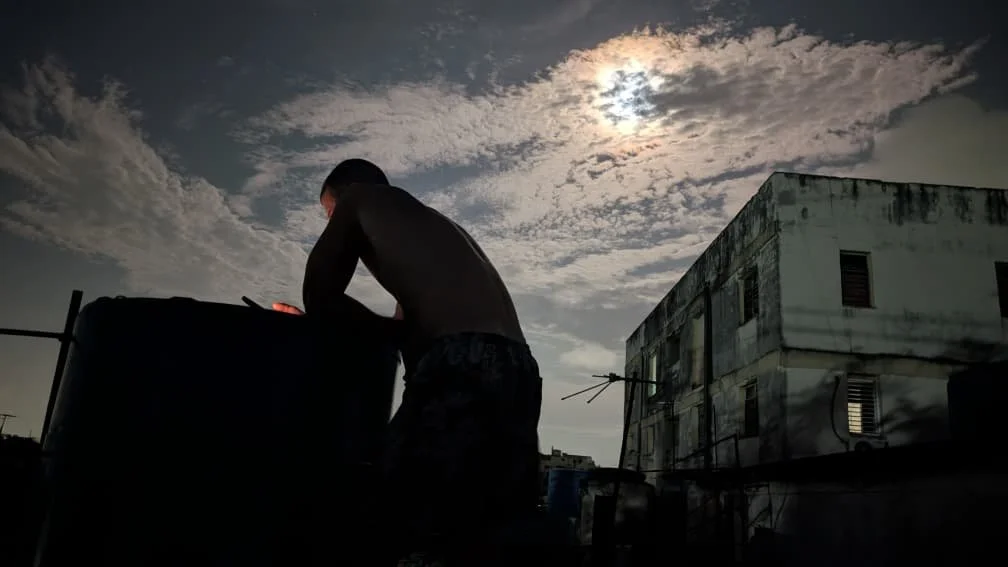
Danet goes up to his rooftop almost every night where he can get some cellphone signal to talk to his mom and play online chess, his passion.
First, the History That Explains the Present
None of this can be understood without going back sixty-six years. U.S. unilateral sanctions on Cuba began in 1960, and their purpose was never a secret. The now-infamous Mallory memo, written inside the State Department that year, proposed denying money and supplies to Cuba in order to bring about "hunger, desperation and overthrow of government."
That is the policy framework still in force today — now enforced at a level one could not have imagined. Whatever one thinks of Cuba's government (and Cubans themselves think many different things), today's crisis is the extreme collision of six decades of external pressure with the island's own internal contradictions.
Life at Two Hours of Power a Day
Cuban homes now average two to four hours of electricity per day enduring blackouts of 18 to 22 hours. The entire national grid has collapsed eight times in the past 18 months, leaving the whole island dark for days.
Since the January 29 US executive order effectively blockaded fuel deliveries by threatening any third country that supplies Cuba, only a single oil tanker has reached the island in nearly half a year. Energy Minister Vicente de la O Levy has been blunt: "These have not been operational errors." There is, he says, a total absence of fuel and no access to parts. In Havana alone, an estimated 13,000 transformers are running beyond capacity.
And when the power goes each day, everything goes. Water pumps stop — families now count every litre. Refrigerators die, so perishable foods spoil. Without gasoline, food rots in the countryside while cities go hungry. Without gas, families burn scrap wood — even plastic — to cook dinner. Trash collection has stalled; garbage piles breed rats, cockroaches, and mosquitoes, and dengue and chikungunya are spreading through the sweltering summer heat, and neighborhoods burn the piles just to shrink them, filling the air with toxic smoke. Hospitals are triaging surgeries. Telecommunications falter too: cell towers run on the same failing grid, disconnecting people for days. Schools, offices, and shops are shuttered. The island is at a standstill.
Nighttime cacerolazos (pot-banging protests), marches, and, increasingly, daylight street barricades are built from the very garbage the state can no longer collect. The government has answered with police operations and arrests.
Our beloved and primary tour guide in Cuba for the past ten years, who most of you know, Gretel Síntes, now lives in Madrid. This is how she describes her country:
“It hurts to talk about the situation Cubans are living through, and it is hard to contain tears from the very first word. So, I'll try to be brief. My close friends and family communicate with me every day, and they tell me about their daily struggles—some I experienced myself, and others nobody ever thought would get this bad.
They suffer from the lack of fuel, which triggers endless blackouts and a complete lack of transportation. Stated like that, it might not sound so terrible—just being in the dark—but this has been daily life for the past 3 months in Havana, and for over a year and a half in the countryside. This darkness comes with no possibility of saving your food ever, because 1 or 2 hours a day are not enough, so you buy food and cook it right away. People avoid going out at night because it is so dark that it is dangerous, yet staying home means enduring unbearable heat with nothing to do.
The aqueducts have not been pumping water for days; my family had to carry buckets today from another neighborhood to be able to bathe themselves and care for the elders. Life has devolved into a daily scramble to solve basic survival problems. The highest price Cubans are paying is not eating poorly, watching less TV, or missing out on the theater; it is having no objective, no hope, no dreams, and no way to nourish their souls with even a small amount of happiness. It is making them feel as though they are losing their potential, when they have so much to offer to the world. Despite everything, Cubans still have a lot of creativity, a kind human spirit, and a strong will, just waiting for the chance to get their homeland back to what it was.” - Gretell Síntes, Tour Guide
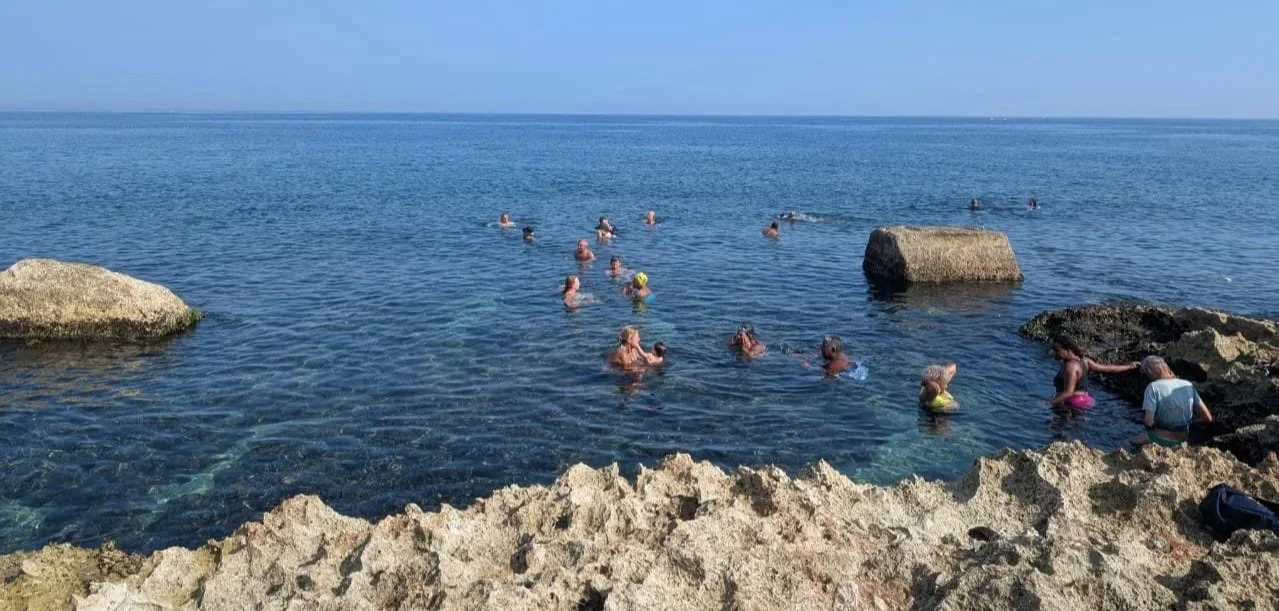
Playita de 16 is one of the few places in Miramar where people can escape the oppressive summer heat—especially without fans or air conditioning, and with no way to travel to the sandy beaches 30 km outside Havana.
The Corporate Exodus
A second US executive order on May 1 escalated sanctions against foreign companies and individuals doing business with Cuba — and the exodus was swift. Meliá and Iberostar, the two largest hotel operators on the island, are leaving. Visa and Mastercard no longer work in Cuba for anyone. Banks, shipping lines, and foreign investors have followed.
Tourism — one of Cuba's last lifelines — has cratered: 359,500 international visitors from January through May, down 58% from last year. At least eleven airlines, including Air Canada, Iberia, Air France, and Turkish Airlines, have suspended service, cancelling more than 1,700 flights. A few counter-currents exist — Air Europa added a fourth weekly Madrid–Havana flight, and Italy's Neos opened a Rome–Holguín route — but they are drops against the tide.
Warships and War of Words
The USS Nimitz, the second largest aircraft carrier in the world, is stationed off Cuba's coast. Raúl Castro, 95, has been indicted in U.S. courts for a 1996 military shootdown of a Miami-based exile group distributing propanda. Trump speaks openly, and often, about taking the island.
Cuba, for its part, has mobilized. The government has distributed civil-defense instructions to every household and activated a reserve system of millions. Reports indicate defensive drones have arrived from Iran and Russia. Meanwhile, a 100-page State Department report alleging ties between Cuba and the American left, mentioning Mamdani, anti-ICE protestors, and Black Lives Matter, raising alarm among analysts about where this escalation leads next.
The battle has reached the courts and the UN as well. The Supreme Court ruled 6–3 that ExxonMobil may sue Cuban state companies over assets seized in 1959 — claims that could exceed $3 billion. Cuba's government, which calls the U.S. blockade a genocide against its people, formally brought the crisis before the United Nations, where the General Assembly opened debate in July and UN human rights officials called for the sanctions to be lifted.
Goodbye to Lenin?
On June 18, something extraordinary happened. Cuba's National Assembly approved the most sweeping economic reform package in the nation's history: 176 measures spanning 23 strategic areas. State enterprises may now convert to joint-stock companies with private and foreign shareholders. Private business is legal for the first time in agriculture, pharmacies, mining, oil extraction, port operations, nursing homes, and gas stations. The 100-employee cap on private firms has been abolished. The universal ration book — a fixture of Cuban life for over six decades — gives way to aid targeted at the most vulnerable. A value-added tax is coming. Foreign investors may operate even in Old Havana, with land rights extending to 99 years. And foreign franchises — reportedly including McDonald's and Starbucks — may soon open on the island.
Cubans are fiercely debating what it all means. Is this the China/Vietnam path — market opening under continued one-party rule, the road that lifted hundreds of millions out of poverty? Or is it perestroika — a rushed liberalization that ends in collapse, as one widely shared Cuban analysis asks? Some see capitulation to Washington. Others see long-overdue liberation of Cuban enterprise. President Díaz-Canel called these the most difficult hours Cuba has faced this century, and insisted the reforms come from necessity, not surrender. Economists note the answer will lie not in the 176 measures themselves but in how they're implemented.
Leaving
Guyana's oil boom, and easy visa policy has made it a major destination for Cubans fleeing the collapse. Brazil received a record 44,381 asylum applications from Cubans last year — double the year before — with many then paying smugglers for a brutal journey through the Amazon. Every departure is a musician, a teacher, a neighbor the island can't afford to lose.
And Yet: Light
As the U.S. starves Cuba of oil, the island is pulling off one of the fastest solar revolutions on the planet, driven by both public investment and private initiative — with considerable help from China. Solar parks are rising at record speed, and families increasingly power their homes with rooftop panels and rechargeable batteries. Yet that independence remains largely a privilege of means: a personal solar system costs far more than most Cuban salaries can bear, and the resulting divide — between households that can buy their way out of the blackouts and those left to endure them — is becoming one of the crisis's starkest new inequalities. Electric vehicles crowned with solar panels have become a familiar sight on the streets of Havana. As the New York Times has documented, Cubans are improvising their way through each dark day with remarkable resourcefulness.
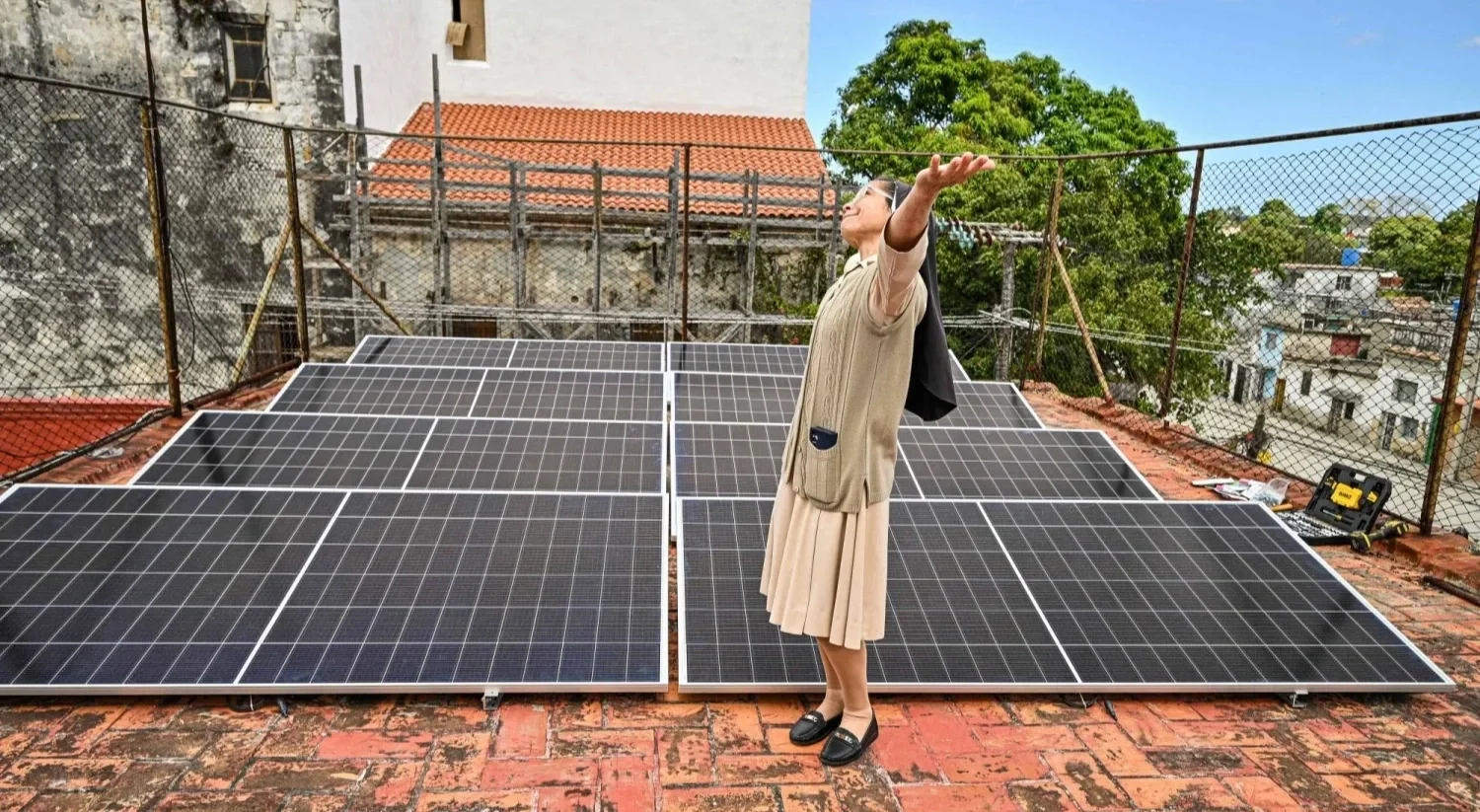
Solar panels are being rapidly added to Cuba’s private and public energy grids and electric vehicle with solar panel roofs are now the primary form of transportation. The expensive barrier of entry is causing start inequalities.
Voices from Havana
We have said it before and it remains truer than ever: Cuban resilience is a daily, practiced, hard-won art. What inspires me most about my Cuban friends is their determination to get up every morning and continue with their lives, their work, their art, and even still find enjoyment wherever they can, despite the extraordinary challenges. Here is what our friends in Havana (many of whom you’ve probably met on our tours) recently told me:
“We’re doing well. We continue fighting to create and develop our farm, Finca Marta. We are always optimistic but are presented with frequent difficulties. We’re using our savings from previous years to sustain operations, pay fuel costs, etc.” - Fernando Funes-Monzote, farmer
“I feel depressed every morning when I wake up but then I feel better once the day composes itself. The foundation is still active because we produce our own solar energy. It’s not the same as before because the panels are not enough to provide electricity for 21-23 hours per day. We cannot use air conditioners. But we are having art events three times per week and a young audience comes and has a good time. We have some new electric motorcycles and an electric tricycle for one driver and six people in back so that we have transportation.” - Wilfredo Benitez, arts administrator
“Electricity is scarce, a liter of gas costs $5. It’s like a war but without the bombs. We need to keep going and adapt as well as we can. We have no other choice.” - Paloma Pino Santos, musician
“Despite all of the difficulties here, we are not bad. Last December we bought a solar panel that gives us an autonomy in the house. So we almost always have electricity and maintain a decent lifestyle. In January I started an online 9-month course in Madrid about adapting my novels into screenplays. - Edel Villalonga, tour guide and author
“We are doing well. Every day things get worse but we can’t stop working or dreaming because we don’t want our lives to pass us by.” - Vladimir Garcia, animator
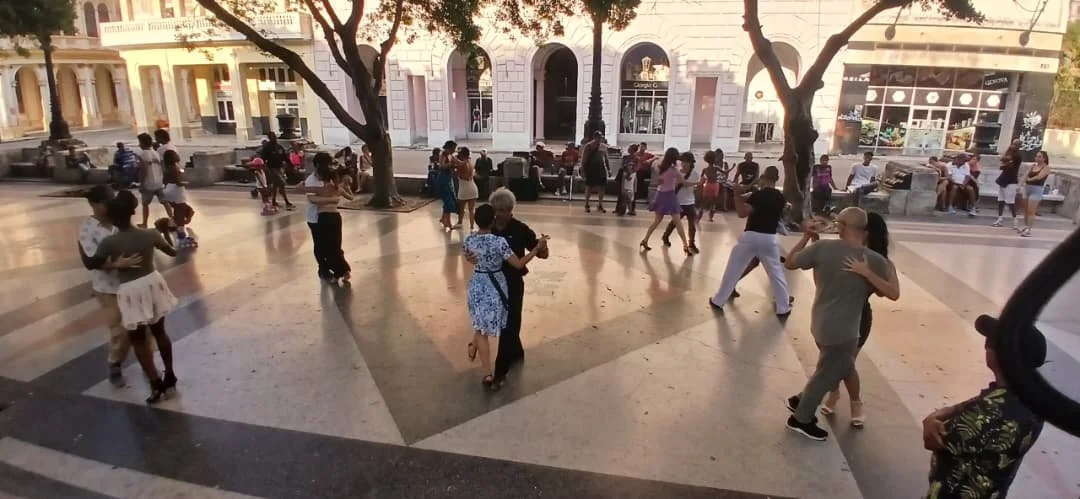
Sunday tango hasn't stopped on the Paseo del Prado. Elena rides her bike for nearly 40 minutes to get there, where dancers and the audience disconnect from their reality for a few hours while daylight lasts.
Where This Goes
Nobody knows how this ends, but scholars are gaming it out. Brian Fonseca and Liany Diaz Gonzalez sketch five near-term scenarios:
1. Targeted coercive action — strikes or operations against indicted officials, on the model of the Maduro seizure, designed to shake elite confidence.
2. Humanitarian intervention — the crisis grows severe enough that Washington steps in under a humanitarian banner rather than a regime-change one. The first cargo plane of aid from Miami just landed last week.
3. Internal fracture — sustained pressure eventually splits the leadership between defenders of the status quo and those who see reform as the price of survival, especially at any succession moment.
4. Negotiated concessions — both governments have confirmed high-level talks, reportedly through backchannels, trading prisoner releases, humanitarian access, and economic opening for sanctions relief. But Havana insists its political system is not negotiable, and Helms-Burton ties the biggest relief to Congress — a gap that may yield only partial, reversible deals.
5. Continued endurance — none of the above. Cuba has survived the unsurvivable before, and could instead settle into long, managed deterioration — decline, emigration, endurance — with no dramatic resolution at all.
The Day After: A National Pact
Amid the scenario-gaming, Cuban-American publisher Hugo Cancio asks a different question: is anyone preparing for what he calls "the day after"? Whenever change comes, he argues, the real challenge won't be who holds power — it will be who keeps the hospitals open, the water flowing, and the food moving, and who prevents decades of accumulated pain from turning Cubans against each other. His proposal: a national pact, agreed now across all ideologies, committing Cubans on the island and in the diaspora to protect essential services and the peace through whatever comes. No witch hunts. No victors and vanquished. A diaspora that returns as builders, not conquerors. The scale of that task is staggering: economists at a July forum estimated rebuilding Cuba would cost $275–375 billion over a decade — $5 to $8 billion just to restore the electrical grid. Countries don't fail when they change, he writes — they fail when they destroy themselves while changing.
That is the one outcome we root for.
Our Commitment
Project Por Amor will return to building cultural exchanges of friendship and understanding between the U.S. and Cuba the moment it is safe to do so. Until then, we'll keep doing what we can from here. We wish it were easier to make a difference, but the following are the only ways we know of to help:
Call your Member of Congress and ask for a Cuba policy that puts people over politics — house.gov / senate.gov.
Support solar for Cuban hospitals through the Let Cuba Live! campaign — every panel is a piece of permanent energy independence. Tax-deductible at letcubalive.info/donate.
Share this post. The Cuban story shouldn't be buried under the world's other emergencies during its most vulnerable moment.
With deep love for Cuba and gratitude for your solidarity,
Sage, Gretell & Adolfo
P.S. Stay tuned for an exciting update on our friend and Cuban guide, Gretell.